You’ve probably already got a design sketched out, and now you’re staring at the fabric decision, cotton spandex or plain cotton. You know cotton spandex stretches. What you’re actually trying to figure out is whether that stretch matters for this particular piece, or if you’d be paying for a feature your garment doesn’t really need.
Here’s the short version. Cotton spandex earns its place in garments that need to move with the body, fitted activewear, close fitting tops, certain uniforms, and pieces meant to hold their shape through repeated motion. For anything structured, boxy, or meant to drape rather than hug, plain cotton is usually still the better call.
Which Garment Types Benefit Most From Cotton Spandex Fabric?
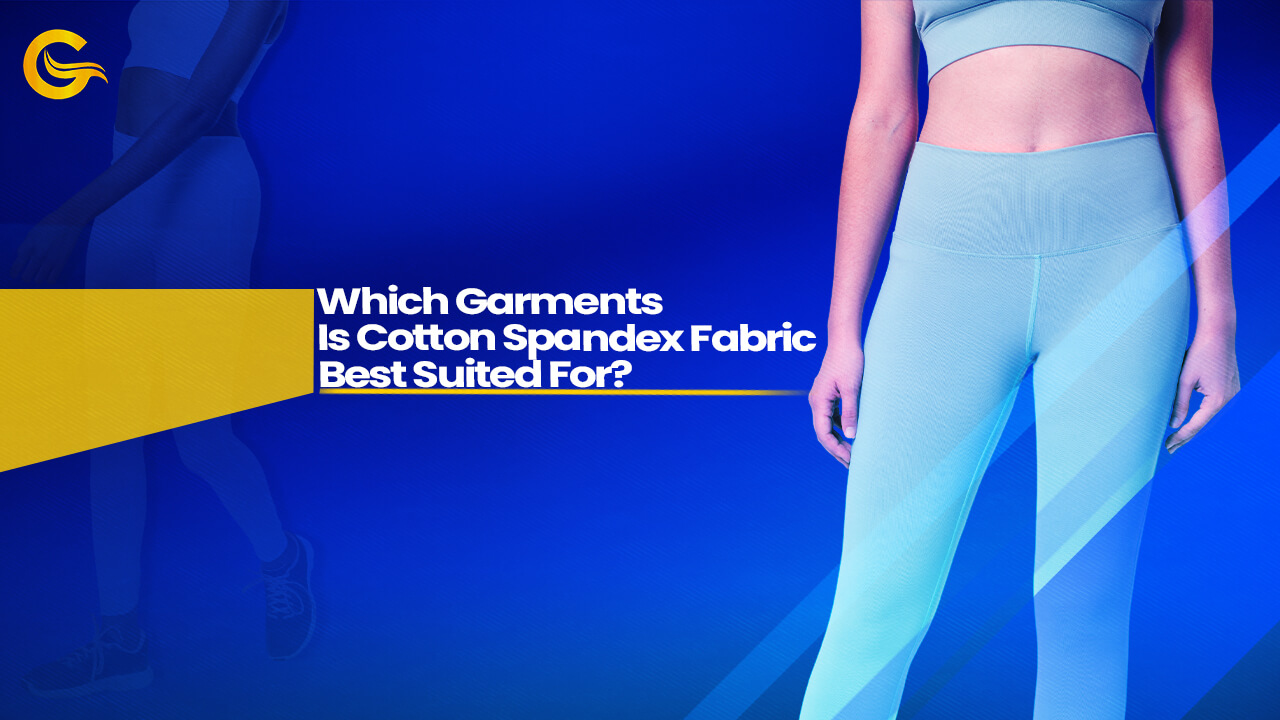
Cotton spandex works best in fitted activewear like leggings and sports tops, close fitting bodysuits and tops, uniforms that involve a lot of bending or reaching, and children’s wear that needs to move and hold shape through active play. Anything that needs to hug the body and bounce back after movement is a strong candidate.
Think about what actually happens to the garment during wear. A legging has to stretch across the knee every time someone bends down, then snap back into shape immediately after, over and over throughout the day. A boxy oversized shirt just hangs there. That difference in demand is exactly why one fabric choice makes sense for one and not the other. The garments that genuinely need cotton spandex are the ones asking a lot of the fabric physically, not just the ones that happen to be fitted in silhouette.
Is Cotton Spandex Good for Leggings and Activewear?
Yes, this is one of the clearest use cases there is. Leggings and activewear rely on stretch and quick recovery to fit and move with the body through a full range of motion, and plain cotton simply can’t keep up with that demand without bagging out or restricting movement.
Does Cotton Spandex Work Well for Fitted Tops and Bodysuits?
Often, yes, particularly when the design is meant to skim close to the body and move with it throughout the day. That said, not every fitted look needs spandex, some fitted silhouettes in woven cotton are intentional and rely on tailoring rather than stretch, so the real question is whether the garment needs to move with the body or simply sit close to it.
Is Cotton Spandex Suitable for Children’s Clothing?
Generally, yes, especially for pieces meant for active play. Kids move constantly, and a fabric that stretches and recovers holds up far better through a day of running and climbing than a rigid, non stretch cotton would, both in comfort and in how the garment looks by the end of the day.
Should You Use Cotton Spandex or a Non Stretch Fabric for Your Garment?
If the garment needs to move with the body through bending, stretching, or repeated motion, cotton spandex is the better choice. If the garment is meant to hold a structured shape or drape loosely, a non stretch cotton is usually the more appropriate fit.
This decision really comes down to what the finished piece is being asked to do, not just how fitted it looks on a hanger. Ask yourself how much movement the wearer will actually go through in it. A uniform for someone bending, reaching, or standing for long shifts benefits enormously from a bit of give, while a tailored button up meant to hold a crisp, structured line doesn’t need stretch and can actually lose that clean look if spandex is added where it isn’t called for. Getting this right per garment, rather than defaulting to one fabric across an entire line, is what separates a collection that fits well from one that just looks fine on paper.
If you’re sourcing cotton spandex for fitted garments or uniforms specifically, Gold Fortune Textile carries options worth checking under their special fabrics category, which is a good starting point for comparing stretch blends against your pattern needs.
What Questions Should You Ask When Choosing Fabric for a New Garment Design?
A few quick questions usually settle the decision fast.
- How fitted is this pattern meant to be against the body?
- How much will the wearer actually move in it during normal use?
- Does the design depend on structure and drape, or on hugging and flexing with the body?
- Will the garment be worn for extended periods where comfort and recovery matter?
Running through these before you commit to a fabric saves you from specifying stretch where it isn’t needed, or leaving it out where it genuinely would have helped.
What Does Choosing the Right Fabric Look Like Across a Real Product Line?
In practice, most small clothing brands end up using a mix, cotton spandex for the fitted, high movement pieces in a collection, and regular cotton for the structured or loose fitting ones, rather than committing an entire product line to a single fabric.
Picture a small brand putting together a mixed capsule collection, leggings, a fitted crop top, and a relaxed button up shirt. The leggings and crop top are obvious candidates for cotton spandex, since both need to move and recover with the body throughout the day. The button up shirt is a different story entirely, its whole appeal is the crisp, structured drape, and adding stretch there would actually work against the design rather than improve it. Specifying fabric this way, piece by piece rather than defaulting to one choice across the whole line, is what makes a collection feel considered instead of generic. This same logic applies directly to workwear too, a stretch blend for a uniform piece that involves a lot of physical movement can make a real difference in how comfortable it feels by the end of a shift.
Making the Call
Cotton spandex isn’t a fabric to reach for automatically just because a garment looks fitted, it earns its place specifically in pieces that need to move with the body and bounce back afterward. For anything more structured or loosely draped, plain cotton is usually still the right call.
If you’re working through fabric choices across a full collection, browsing a fabrics catalog side by side is a simple way to compare stretch and non stretch cotton options before finalizing what each piece in your lineup actually needs.