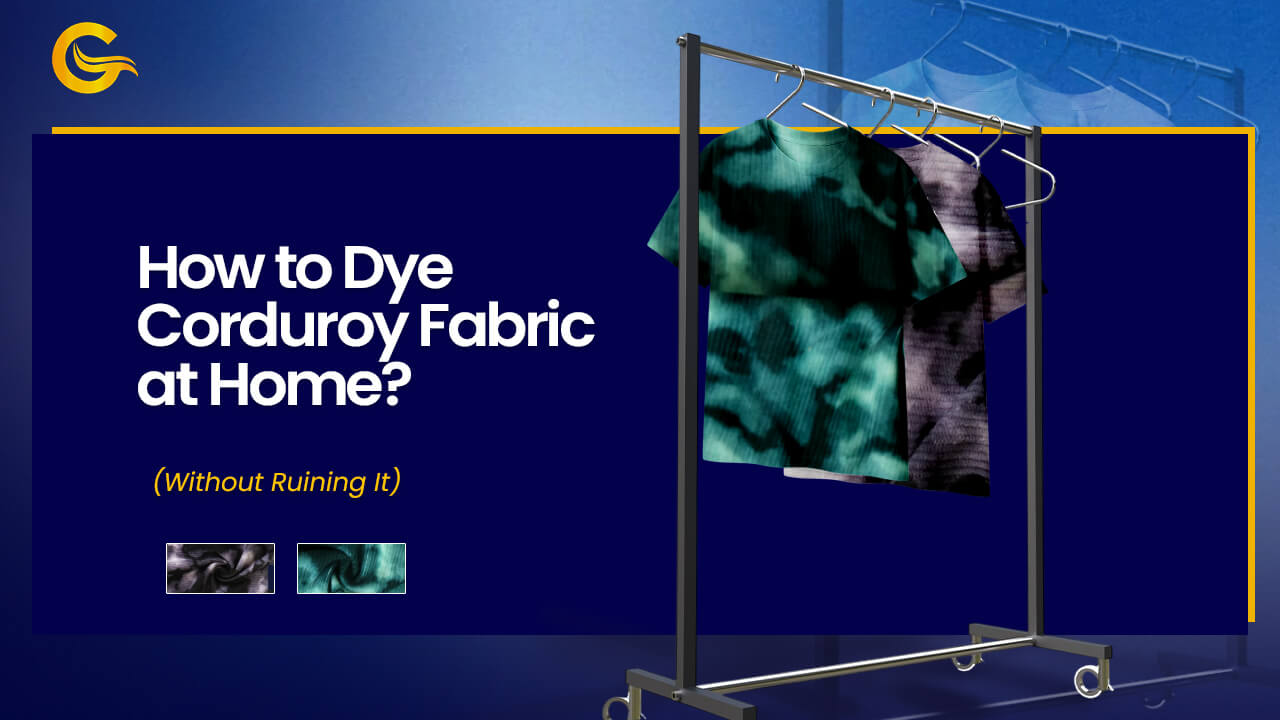
Corduroy has a texture that makes it stand out from other fabrics — those raised ridges, called wales, are what give it that distinctive look and feel. That same texture is also what makes people nervous about dyeing it at home. There’s a common worry that dyeing corduroy will flatten the wale or leave the color patchy along the ridges. Done carefully, that’s avoidable.
Why Does Corduroy Take Dye Differently Than Other Fabrics?
The wale structure means corduroy has more surface texture and pile than a flat woven fabric, so dye can settle unevenly if the fabric isn’t prepped and moved properly during the process. Fiber content matters too — cotton corduroy takes dye far more predictably than corduroy blended with synthetic fibers, since synthetic content often resists standard fabric dyes or requires a different dye type entirely.
Before starting, it’s worth checking the fabric content on the tag. If you’re not sure, our guide to fabric testing methods covers simple ways to identify fiber content, which will save you from a dye job that doesn’t take evenly.
How Do You Dye Corduroy Fabric at Home?
Four things determine whether the color comes out even and the wale stays intact: what you do before the dye bath, what dye you use, how you handle the fabric during dyeing, and how you dry it afterward.
Step 1: Prep and Check the Fabric
Start with a clean, pre-washed piece — any sizing or finish left on new fabric can block dye from absorbing evenly. This is also the point to confirm fiber content from the step above, since it determines which dye you’ll need next.
Step 2: Choose the Right Dye
Use a dye suited to the fiber content you confirmed. Cotton corduroy works well with standard fiber-reactive or all-purpose dyes, while blends may need a dye formulated for synthetic content, or may only partially take color.
Step 3: Keep the Fabric Moving in the Dye Bath
Keep the fabric moving constantly rather than letting it sit. This is the step people skip when they’re in a hurry, and it’s the main reason dye ends up patchy along the wale — sections that stay pressed against the container or against themselves absorb less dye than sections that stay in motion.
Step 4: Dry and Set Without Flattening the Wale
Skip the wringing-and-twisting instinct when removing the fabric — press water out gently instead. Let it air dry rather than machine-drying on high heat, since heat is often what flattens wale texture rather than the dyeing process itself. A cool iron on the reverse side, if needed afterward, is safer than direct heat on the right side of the fabric.
Can You Dye Corduroy Without Damaging the Wale Texture?
Yes, as long as you avoid high heat and excessive agitation, both of which can flatten or crush the pile over time. Gentle, consistent movement in a dye bath at the temperature recommended for your dye type is enough to get even color without roughing up the texture — the same principles covered in the steps above.
Whatever dye and fabric combination you’re using, a small swatch test before committing to the full piece will tell you more than any general guide can — corduroy’s behavior can vary noticeably by weight and blend. If you’re sourcing corduroy or want to compare weights and blends before starting a project, take a look through our fabric shop for options, or read our overview of fabric blends and how they affect performance for more context on how fiber content changes outcomes like this.